
Steve Wilcock MD at North West Fire Training Ltd has spent the last 2.5 years developing a brand new to market Critical Incident Response App. During fire safety training sessions, one question kept cropping up time and again:
“How do we stay resilient when so many people are now working from home?”
When the pandemic hit, countless organisations across the UK had to adapt almost overnight. For many of North West Fire Training’s clients, hybrid and flexible working patterns became essential to survival some companies might not have made it through COVID at all without authorising home working.
But as remote and hybrid work became the new normal, one thing became increasingly clear: the traditional model for fire and incident response simply didn’t fit anymore.
The Problem with Fixed Fire Roles
Historically, workplaces would pre-nominate individuals to take on specific duties during an evacuation — such as Fire Marshals or Assembly Point Coordinators.
That system worked perfectly when everyone came to the same building every day and historically at the same time.
However, as hybrid working took hold, that predictability disappeared. People started working from home two or three days a week, coming in late, or changing shifts. It suddenly became almost impossible to pre-assign fire roles with any confidence.
The risk was obvious: if the alarm went off on a Tuesday, half of the nominated fire team might not even be in the building.
A Simple Idea with a Big Impact
That’s when the concept for Marshal Eye began to take shape.
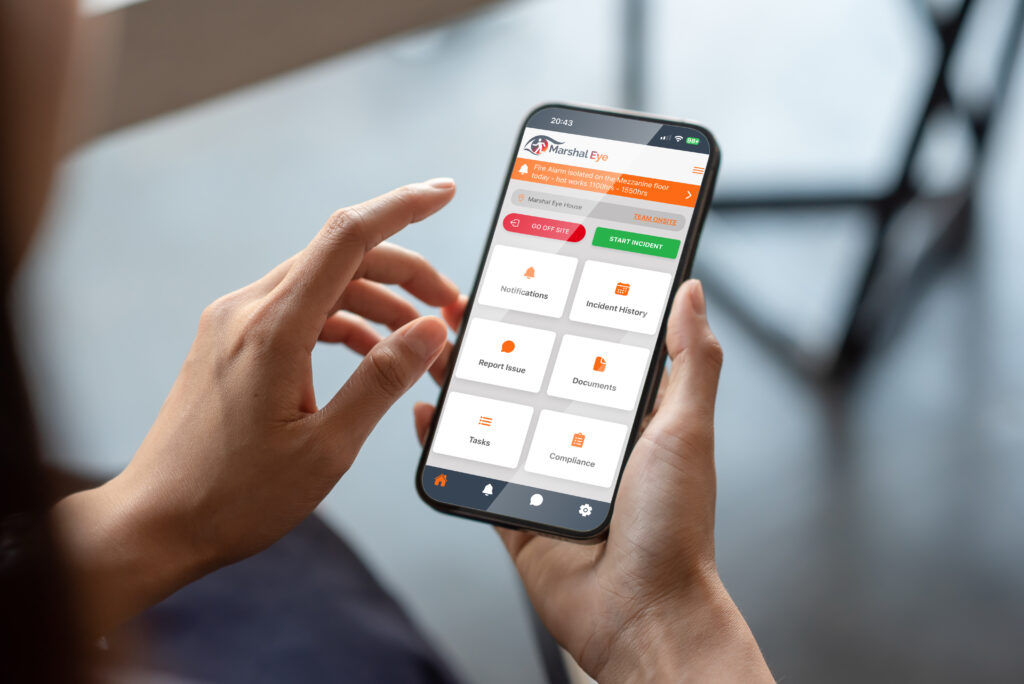
The Marshal Eye home screen provides a clear, user-friendly interface that helps staff quickly claim roles and manage incidents during evacuations.
Steve wanted to design something practical, digital, and based on how people really work today. The first idea was simple but powerful an opt-in role model.
Instead of assigning people in advance, users could claim a role on the day, in real time, directly from their phone. Whether someone was in the office, visiting another site or working remotely, the system would know exactly who had opted in and where the coverage gaps were.
Instant Communication During an Incident
The second goal was to end the information vacuum that so many Fire Marshals find themselves in during an evacuation.
Too often, Marshals operate in isolation one at the front of the building, one on the second floor, another at the assembly point — each unaware of what’s happening elsewhere.
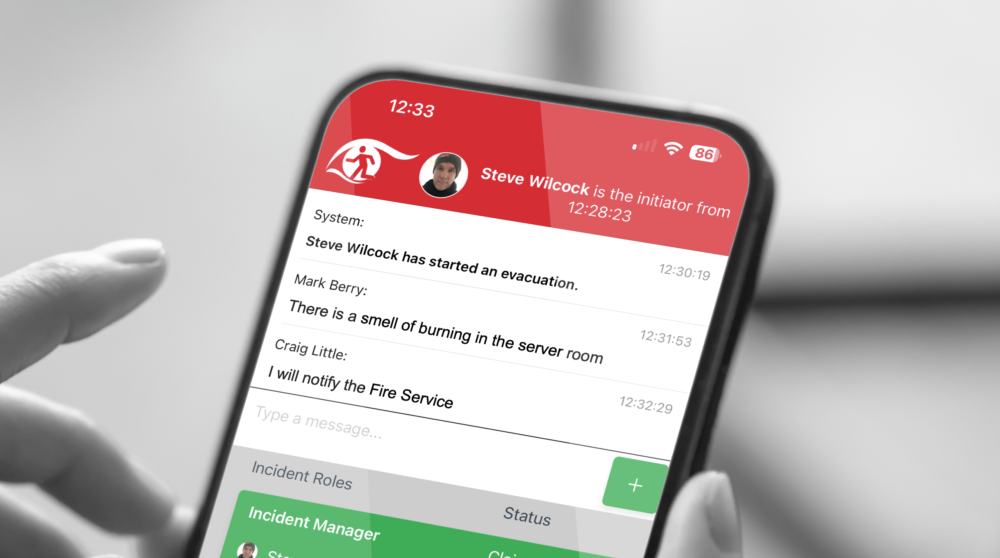
With Marshal Eye, everyone involved can see the live situation as it unfolds. They can send quick status updates, escalate or de-escalate the incident, and confirm when zones have been cleared. It’s teamwork in real time not guesswork after the fact.
Capturing Data That Matters
The third part of the plan was about insight.
Because the app lives on people’s phones, it can automatically capture valuable data during every drill or incident.
Things like:
- How long did it take for all roles to be claimed?
- How quickly was each zone cleared?
- How long did the full evacuation take?
All communication is timestamped to the second and recorded in a live message feed, which becomes a permanent, detailed report once the event ends.
This means organisations can review their performance objectively, identify delays or weak points, and improve with every drill.
From Idea to Reality
That combination — flexibility, communication, and data — was the spark that brought Marshal Eye to life.
What started as a simple idea became a fully functional digital platform designed to help organisations adapt to a modern world of hybrid working, remote teams and evolving fire safety expectations.
Today, it’s more than just a tool for evacuation. It’s about visibility, accountability and smarter decision-making during any type of incident.
If you would like to find out more please visit our sister website www.marshal-eye.com
#MarshalEye #FireSafety #HybridWorking #CriticalIncidentResponse #EvacuationPlanning #FireMarshals #WorkplaceSafety #EmergencyResponse #SafetyTech #IncidentManagement